Essential cookies keep the cart, login session and selected vehicle working. Additional analytics and marketing tools run only after your consent.
EVENTURI CARBON INDUCTION SYSTEM | AUDI RSQ3 F3 2019+
The product fits both the RSQ3 F3 and RSQ3 F3 Fastback versions Product number: EVE-RSQ3-CF-INT
Power increases (RS3 with factory turbine): 15-18 HP and 26-31 Nm Power increases (RS3 with hybrid turbine): 25-30 HP and 27-32.5 Nm
The Eventuri intake system was originally created for the RS3 platform and can now also be fitted to the RSQ3. The intake has been designed to provide the best possible airflow while maintaining the lowest possible temperature. Each element, thanks to its carefully designed structure, contributes to providing a smooth path for the free flow of air to the turbine. The intake pipe with a diameter of 103 mm (a little over 4") has gentle bends from the filter housing to the turbine inlet. The filter itself was designed specifically for this intake system - its outer diameter is as much as 210 mm (8.3") and the filtering surface is over 130,000 mm2. The patented Venturi casing provides the largest internal volume possible in the RSQ3 engine bay and guarantees laminar (layered, unobstructed) flow to the turbine inlet. The air intake, however, tightly connects the filter opening with the front fascia, but is not limited to the factory intake opening. The front of the Eventuri intake was slightly raised to create an additional opening under the hood, corresponding to the cross-sectional area of a 7" diameter pipe. This achieved a flow of 396 l/m (1.01 Psi) while maintaining a low temperature thanks to the tight design.
Eventuri advantage
The Eventuri intake system for the RSQ3 F3 uses a patented carbon housing, ensuring an aerodynamically efficient airflow path from the filter to the turbine inlet. This is not another cone filter with a cover, but a unique design that uses the Venturi effect.
Flow tests Eventuri engineers used the Superflow SF-1020 to measure the maximum possible flow at a pressure of 1.01 psi. The tests were performed on the same day under controlled conditions using the same measurement station for each system. The complete Eventuri intake system and the factory equivalent were tested. The measurement results showed a significant advantage of the Eventuri intake system over the standard set - the maximum flow is as much as 58% higher. Importantly, this result was achieved in a closed system, which additionally ensures the lowest possible levels of intake air temperature.
Dyno tests The Eventuri Stage 3 intake has been tested by many respected tuners around the world who have built strong RS3/TTRS designs for road and track use. The first set of results comes from the BR Performance team in the Netherlands, who tested the intake on a TT RS with the TTE700 hybrid turbine. Tests were performed on the same day, one after the other, with the mask closed. The factory filter housing was compared to an Eventuri Stage 3 intake along with a 4-inch optional turbine intake. Summary of dyno results: Factory housing with modified factory turbo inlet for TTE700 = 576.5 HP Eventuri Stage 3 intake with modified factory turbine intake for TTE700 = 606.5 HP Eventuri Stage 3 intake with Eventuri turbine intake for TTE700 = 620.8 HP
The Eventuri Stage 3 intake was also tested in projects with full turbo kits, squeezing the maximum performance from the DAZA engine. Tests conducted by Eurocharged Canada using an Eventuri stage 3 intake with a plan to obtain 1,010 HP at the wheels confirmed the capabilities of this system even more clearly. The Eurocharged team admitted that they were able to make more power at lower boost by using an Eventuri intake compared to the competition's intakes. Their RS3 posted a time of 9.1 seconds in the quarter-mile race with a final speed of 160 mph (257 km/h), and is on track to achieve a sub-9-second mark. Such increases are the result of a combination of several factors: 1) A tightly closed system keeps intake air temperatures low - the RS3 engine compartment overheats quickly, so using an open cone filter will result in poorer performance. 2) The Venturi housing guarantees a smooth transition from the filter to the inlet pipes with an internal diameter of 103 mm. This allows hybrid turbines and full turbo kits to operate efficiently. 3) The entire set is made of pure pre-preg carbon fiber, which perfectly insulates thermally and has a smooth inner surface, unlike fiberglass with sharp resin lines.
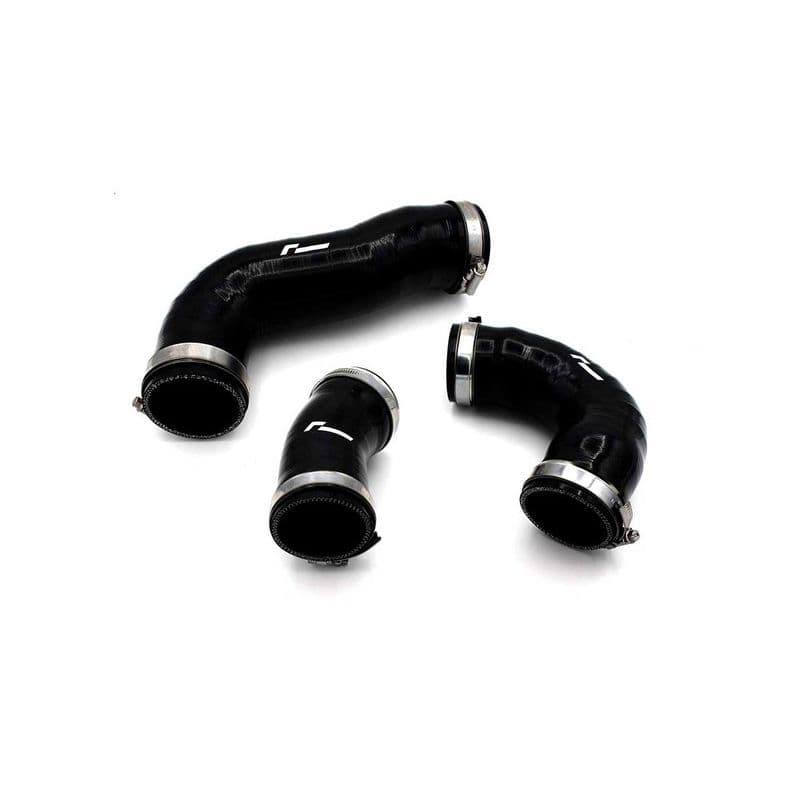
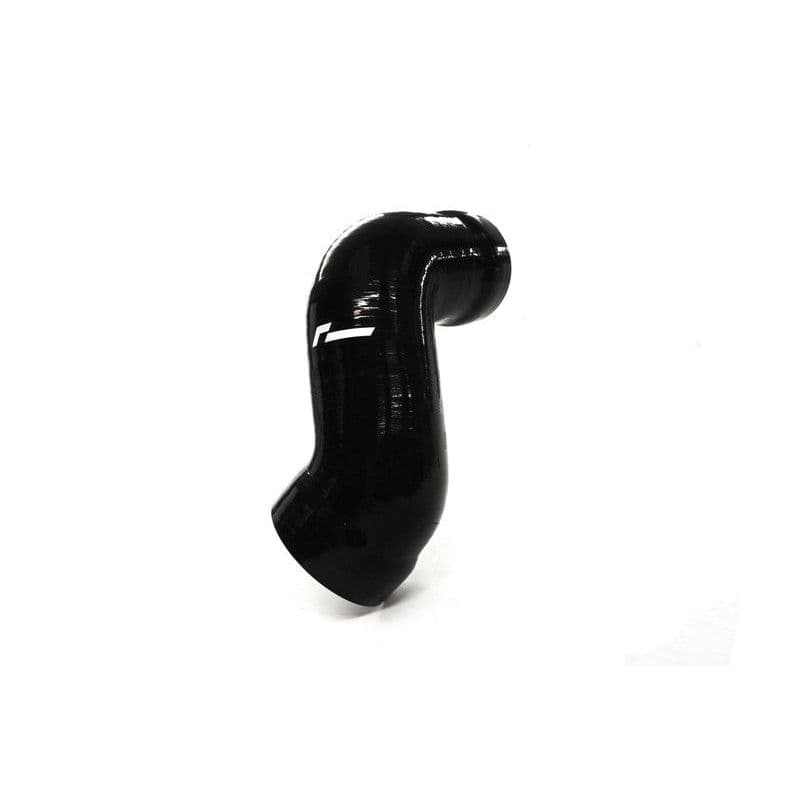
DETAILED INFORMATION The Eventuri intake system for the Audi RSQ3 consists of several elements that fulfill precisely defined functions and are made in accordance with the highest quality standards, entirely from carbon fiber without any addition of glass fiber. This results in a smooth internal surface, ensuring unobstructed air flow. Below you will find descriptions of individual components and an explanation of their operation. Each intake system consists of the following components: • patented carbon Venturi housing with a 103 mm outlet • specially developed dry air filter with a high flow rate • carbon fiber intake duct • carbon tube with an internal diameter of 103 mm • heat shield with a gold reflective coating • laser cut stainless steel handles • silicone vent hose • silicone connectors and reducer
Patented Venturi filter housing The Eventuri Stage 3 housing includes a specially created, high-flow air filter, an aluminum cap, laser-cut handles and a carbon shell itself. The shell houses a reverse-mounted filter, smoothing the airflow before it enters the intake pipes. A gentle reduction in the cross-sectional area causes the Venturi effect, i.e. acceleration of the air flow while maintaining its layered (laminar) arrangement. The housing design resembles a trumpet-shaped intake pipe (velocity stack). The diagram below shows a comparison between the Eventuri design and a regular intake system.
Special Stage 3 cone filter To achieve the maximum airflow rate, Eventuri engineers completely redesigned the Stage 2 filter, enlarging it to the maximum size that the RS3's engine bay can accommodate. The outer diameter of the new generation filter is 210 mm (8.3") - tests using the carbon casing alone showed a flow of 396 l/m l/s at a pressure of 1.01 Psi. The filter insert is a dry type and is ISO certified, guaranteeing a filtration level consistent with the OEM standard. The design is based on a characteristic cone shape, supporting the Venturi effect generated by the casing.
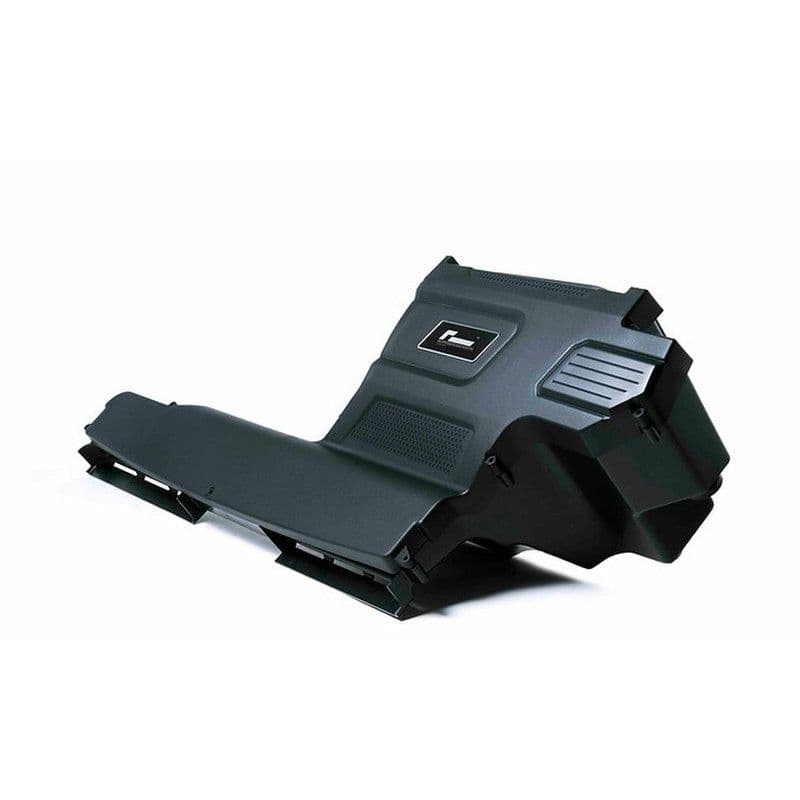
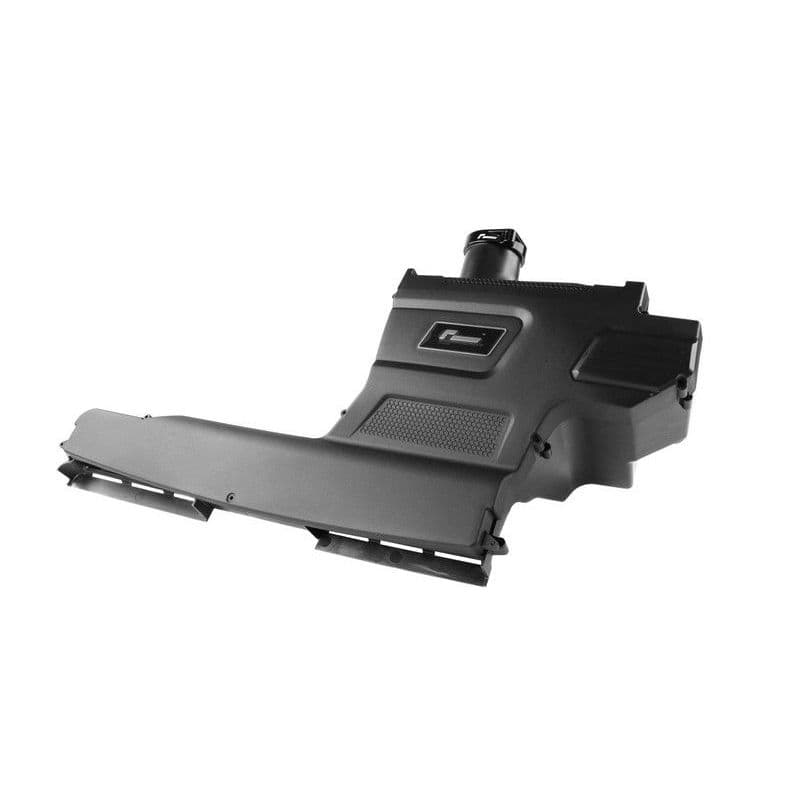
Carbon intake duct The intake duct directs air from the front fascia area to the filter housing. It fits the factory components and blends smoothly into the round shape of the carbon shell. To ensure tight insulation from the high temperature in the chamber, a flexible rubber rim is used around the opening, which presses against the filter housing, allowing it to move with the engine. Due to the fact that the Eventuri intake is intended for high-power vehicles, it was decided that the factory holes on the front of the vehicle might not be sufficient if there was a greater demand for cold air. Therefore, the top part of the Eventuri duct was raised, creating an additional opening above the front fascia, allowing additional air to be drawn in from under the hood closure. This additional gap has the same surface area as a 7" diameter pipe and completely unblocks the factory cold air system. The Eventuri Stage 3 intake duct is designed to obtain the maximum internal volume allowed by the geometry of the engine bay. This allows the filter housing to draw in air with minimal flow restrictions. Eventuri engineers also ensured the Stage 3 intake duct is compatible with the enlarged throttle bodies.
Carbon intake pipe The intake pipe is made entirely of prepreg carbon, which makes its internal surface smooth and the fiber weave clearly visible. The Stage 3 pipe, with a diameter of 103 mm (4") and gentle bends to minimize pressure drops, directs the air flow from the Venturi casing to the turbine inlet. Its geometry guarantees a laminar air flow from the filter to the outlet.
Heat shield Due to the high temperature generated by the turbine, Eveturi engineers designed a heat shield to protect the carbon intake pipe. The cover has a black powder coating and a gold layer at the base that reflects heat from the turbine and catalytic converter. The stainless steel handle ensures rigid mounting and fits the shape of the pipe to direct the heat in a different direction. NOTE - the cover may not fit some full turbo kits with a different exhaust manifold.